24/7/365 availability
Nationwide coverage across all 50 states
Products · Temporary Fencing & Barricades

Temporary fence & barricade rentals.

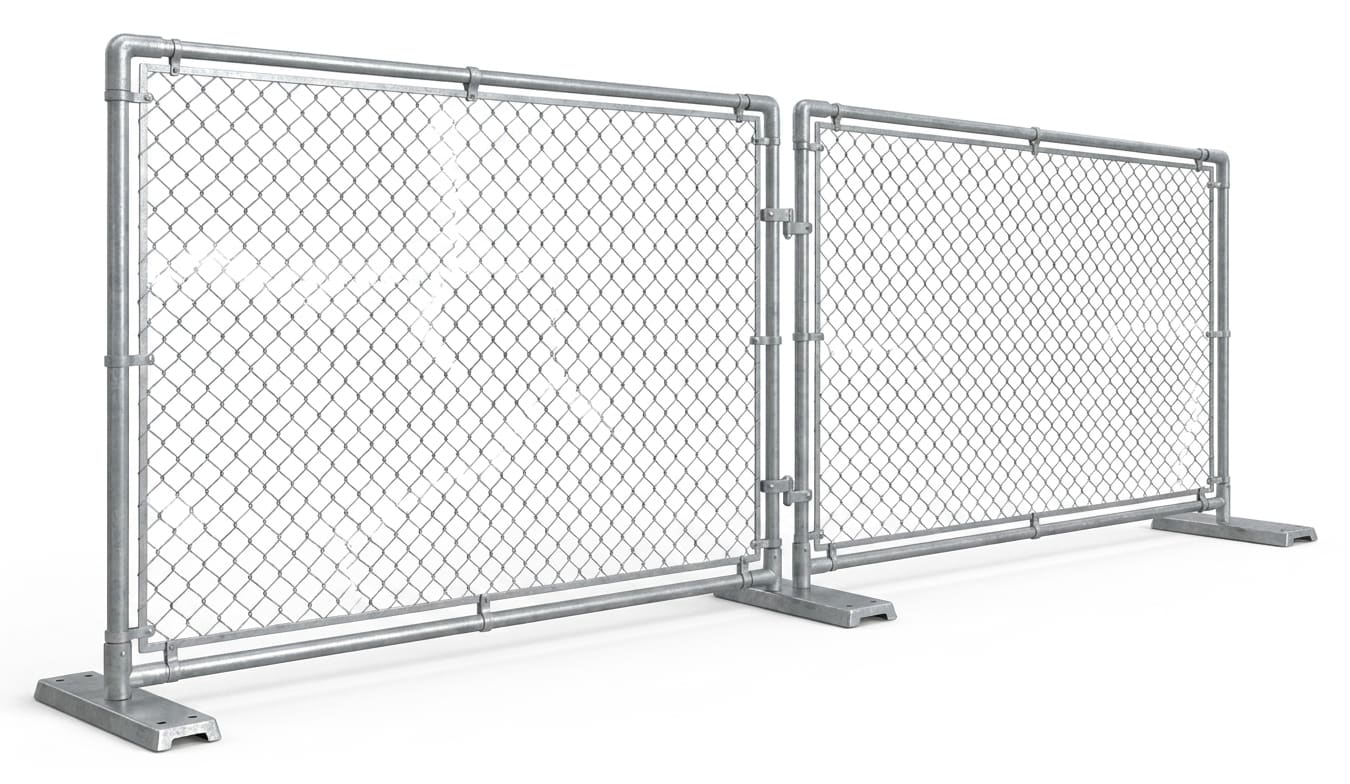
Rent chain-link panels, crowd-control barricades, hoarding panels, and windscreens. LDR coordinates with you and handles installation, mid-rental changes, and removal for each site.

Temporary chain-link fence line on free-standing ballasted panels, with interlocking pedestrian barricades, closing off a commercial lot
Installed on-siteCrews set, clamp, ballast, and remove the panels.
7,500+Vetted vendors nationwide
10,000+Projects delivered per year
50States covered
24/7/365Live emergency line
Lineup Detail

Compare products.

Compare the four fencing options below, then confirm the product required for your site.

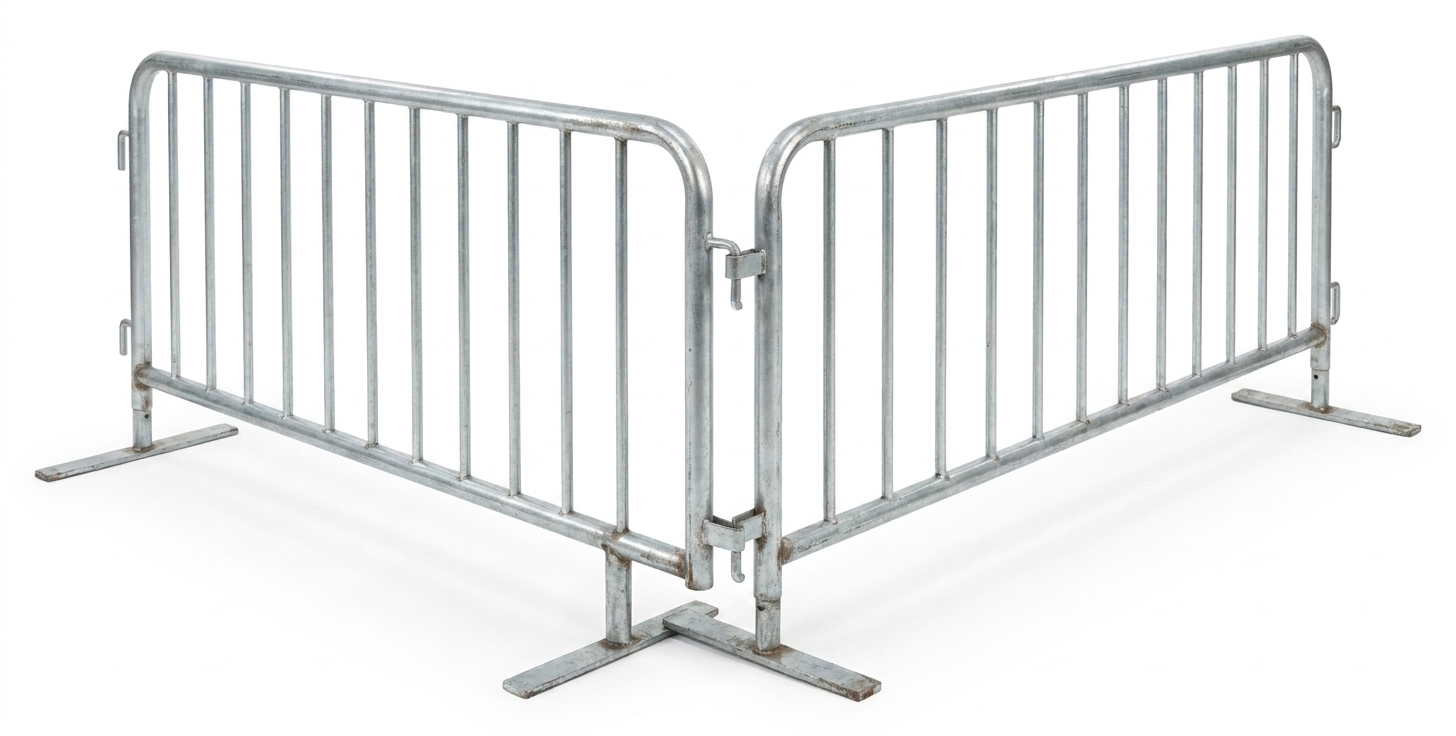
An interlocking galvanized steel crowd-control barricade
Events and pedestrian control

Crowd-control barricades.

Interlocking galvanized-steel sections connect end to end and release when angled apart. One worker can reposition a section by hand, allowing the layout to change as queues, entrances, and closures move.

Size8′ L × 43″ H A common event size, about waist-to-chest height.
BuildGalvanized steel, welded uprights Suitable for outdoor use throughout the event.
InterlockHook-and-loop ends Sections join into a continuous line without tools for setup or removal.
Weight~35–45 lbs per section One worker can move a section and adjust the route.
FeetFlat or bridge Flat feet reduce interference where foot traffic crosses the line; feet are removable for transport.
What a crowd-control barricade does
  • Channels crowds, queues, and entry points without enclosing the full site
  • Closes a sidewalk or lane while maintaining the planned pedestrian route
  • Can be repositioned by hand to meet changing needs
  • Stacks for removal by the same crew that installed it

Best for: Events, queues, entrances, and sidewalk closures where the pedestrian layout may change during use.

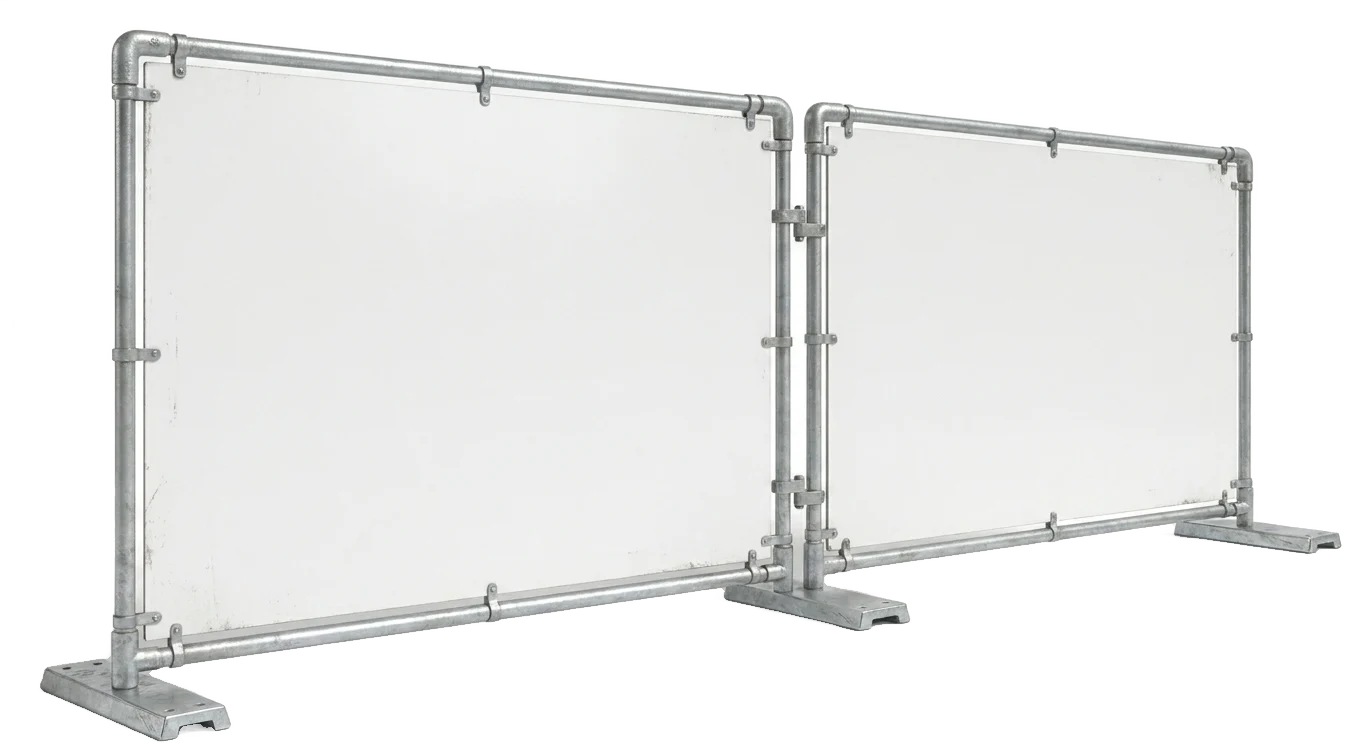
A solid hoarding privacy panel on a temporary fence base
Privacy and controlled access

Hoarding (privacy) panels.

Solid-faced panels block views of the work, equipment, and staging area. Because the solid surface carries more wind load than chain-link, the installation requires heavier ballast.

Height6–8 ft A common construction range; local code may set the required height.
FaceSolid panel Blocks sightlines while supporting controlled access.
ConnectionCoupler-joined panels Panels join to form a continuous visual barrier.
BallastWind load added to every panel The ballast specification must account for the panels when you book.
What a privacy panel does
  • Blocks public view of the work, equipment, and staging area
  • Reduces visual distractions between the work zone and public areas
  • Provides a surface for site signage where jurisdiction requires it
  • Pairs with locking gates for controlled access

Best for: Streetside construction, renovations, and other sites where the work and equipment must stay out of public view.

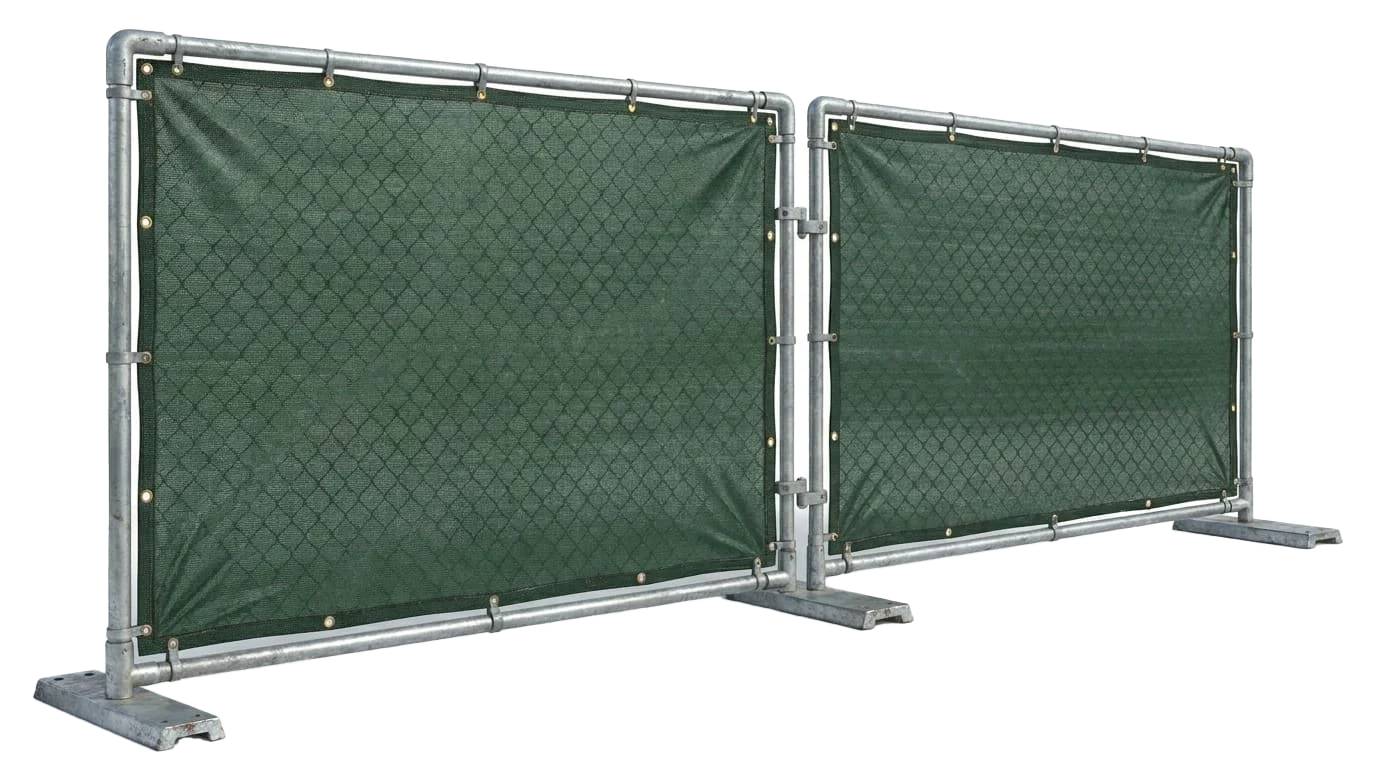
A chain-link fence panel fitted with a privacy windscreen
Privacy and debris control

Windscreens.

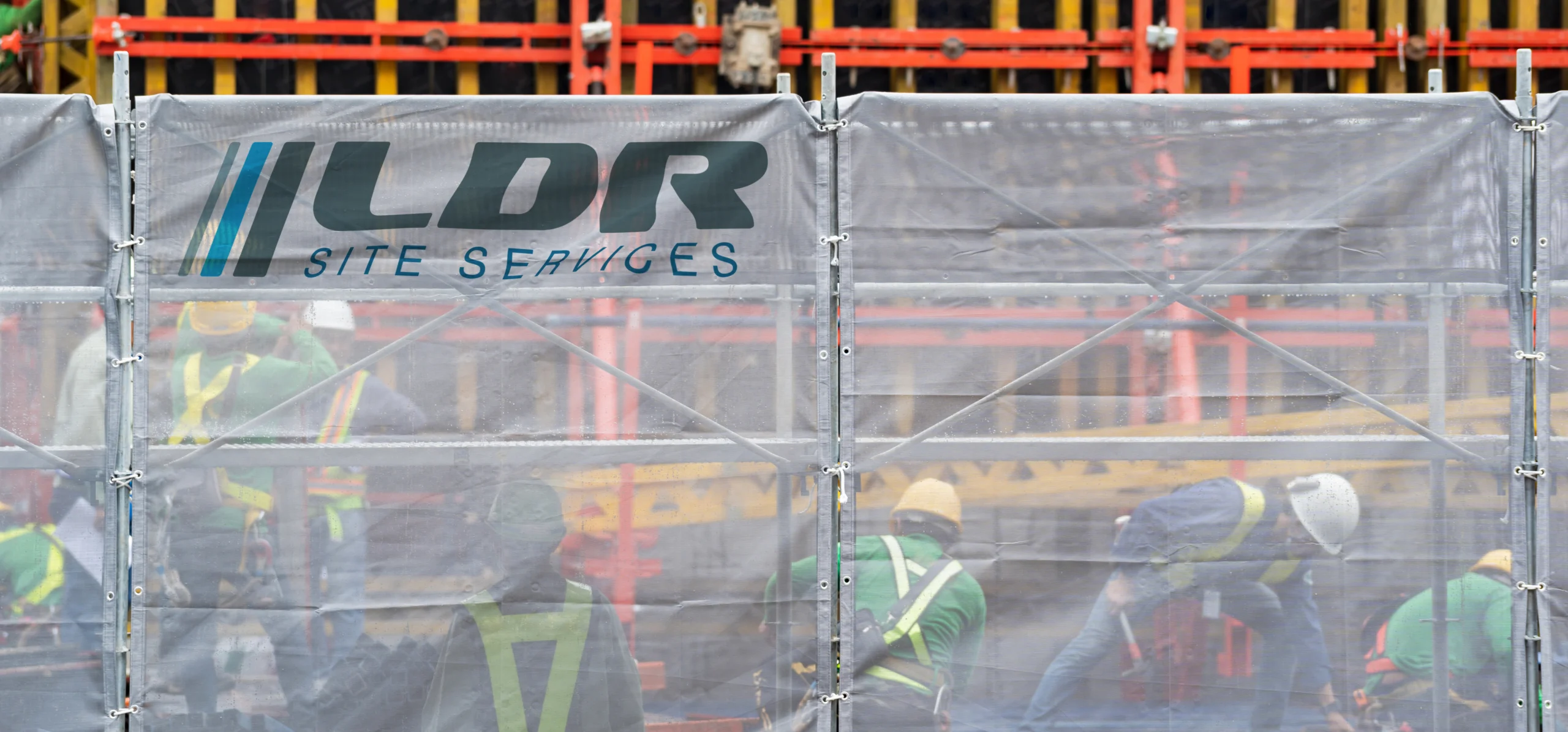
UV-treated mesh screening ties onto chain-link panels to reduce sightlines and contain dust and wind-blown debris. The screen adds wind load to every panel and will require heavier ballast.

Blockage85% privacy factor Reduces visibility while allowing some wind to pass through the mesh.
MaterialUV-treated HDPE mesh Reinforced hems support extended outdoor use.
FitSized to 6-ft and 8-ft panel runs Grommets along the hem secure the screen to the frame.
BallastWind load added to every panel The ballast specification must account for the screens when you book.
What a windscreen does
  • Reduces sightlines through an existing or new chain-link run
  • Helps contain dust and debris inside the work zone
  • Reduces wind at ground level along the fence line
  • Can be removed and reinstalled as work phases open and close

Best for: Chain-link runs that need added privacy, dust control, or debris containment.

Standard sizes are shown. Dimensions, materials, and configurations vary by market and manufacturer.

Add related site services to the same order. Coordinate these products with your temporary fencing and barricades through the same contact and invoice.
All products
Code & Site Requirements

Planning considerations before installation.

Fence requirements vary by jurisdiction and site use. LDR reviews the location, application, ground conditions, screening, and exposure before scheduling installation, then flags local code and permit requirements for your team.

Temporary fencing requirementsWhat we review before installation is scheduled
Code and use
  • Local code sets the required fence height. We flag the requirements for your jurisdiction before the installation is scheduled.
  • Height also depends on the application. Event barriers are commonly about 4 feet high, while construction fencing commonly runs 6–8 feet.
  • OSHA requirements address secure barricading and hazard signage. The installed line and signs must match the site exposure.
  • Site signs face the hazard or public approach. Warnings are visible from the exposed side of the line.
Installation plan
  • Panels connect with clamps and stand on the specified support. Weighted bases, sandbags, or ground anchors secure the line without permanent posts.
  • Screening changes the wind load. Windscreens and solid hoarding panels require ballast calculated with the screening included in the order.
  • Sidewalk closures require a pedestrian route. We plan barricade placement around the required ADA route before installation.
  • Permit requirements are flagged before the crew is scheduled. Requirements vary by jurisdiction, and your team remains responsible for applying for and obtaining the permit.
Rental & Installation

Coordinate the fence plan, installation, changes, & removal in one rental.

LDR specifies the panels, gates, and ballast before coordinating the installation crew. During the rental, the same contact handles phase moves, extensions, repairs, and removal, so your team doesn't need to source separate installers or closeout contractors.

  • Installation takes 30 minutes to several hours. The quote includes the expected installation window.
  • Rental periods range from a weekend event to a full construction project. Set the term for the job and request an extension through the same contact.
  • Removal clears the temporary line and its bases. Free-standing systems leave no permanent posts or fixtures to restore at closeout.
From order to closeoutWhat the rental covers Service scope
01
The specificationsLDR confirms the run length, gates, ground conditions, screening, and wind exposure, then calculates the panel count, gate placement, and ballast before delivery.
02
InstallationThe crew sets, clamps, and ballasts the panels, hangs the gates, and places barricade lines according to the plan.
03
Mid-rental changesUse the same contact to request phase moves, extended runs, gate relocations, or repair of a downed section.
04
RemovalAt closeout, the crew takes down the line, stacks the equipment, and removes the temporary bases and panels.
Service & Changes

One response team covers repairs, relocations, extensions, & emergency needs.

LDR's emergency response team answers 24/7/365 and coordinates changes to keep the perimeter aligned with the site plan.

Report a downed or damaged section.

After wind damage, a vehicle strike, or a breach, the response team coordinates a reset or replacement to close the line again.

Update the fence layout as work phases change.

Request an extended run, a phase move, or a gate relocation through the same contact who coordinated the original installation.

Request an emergency perimeter day or night.

For a damaged storefront, closed structure, or site that must be secured before morning, call the 24/7/365 response line.

Hurricane Helene · Emergency Response Rows of restroom, shower and laundry trailers at a temporary community care site in a retail parking lot.
4 care sites · under 48 hoursRunning for 4 weeks

After Hurricane Helene, a national big-box retailer opened 4 emergency care centers across inland North Carolina. In under 48 hours, LDR coordinated generators, light towers, ADA-accessible restroom, shower, and laundry trailers, and temporary fencing for privacy and protection of site infrastructure. LDR kept the 4 sites operating for 4 weeks.

Read the case study
Call 877-605-2211
Call LDR today, our team is ready to take your call.

FAQs.

How much does it cost to rent temporary fencing?
Pricing depends on the fencing type, footage, gates, screening, rental duration, and market. Share the site requirements, and we'll provide the cost before you book. There's no deposit and no obligation.
How is temporary fencing installed?
Panels connect with clamps and are stabilized with weighted bases, sandbags, or ground anchors. Free-standing systems use no driven posts or permanent fixtures, allowing installation on pavement and finished lots without permanent ground work.
How long does installation take?
Installation takes 30 minutes to several hours. The quote includes the expected installation window, and the installation crew sets the equipment.
Can I set it up myself?
Some temporary fencing can be self-set, but construction and higher-security sites require a stable, compliant line. LDR includes professional installation and removal in the rental.
What are the different types of temporary fencing?
The main options are chain-link panels for construction perimeters, crowd-control barricades for events and queues, hoarding panels for privacy and controlled access, and windscreens that add privacy and debris control to chain-link. Share the site use and conditions, and we'll specify the type.
Does temporary fencing meet OSHA requirements?
Local code, not OSHA, sets fence height, and the requirement varies by jurisdiction. We flag the applicable height before installation is scheduled. OSHA requirements address hazard signage and secure barricading, which are included in the installation plan. Equipment comes from vetted suppliers held to one standard.
Are there height restrictions?
Local regulations may limit or require a fence height. Event barriers are commonly about 4 feet high, while construction fencing commonly runs 6–8 feet. We flag the applicable local requirement before installation is scheduled.
Can it withstand strong winds and bad weather?
The installation plan accounts for wind through weighted bases, sandbags, ground anchors, and appropriate screening. Windscreens and solid hoarding faces add wind load, so those runs require heavier ballast specified with the order.
Can I rent fencing for a short-term event?
Yes. Rental periods range from a weekend festival to a multi-year construction project. We coordinate installation before the event and remove the panels and bases afterward.
Can you cover more than one location?
Yes. LDR coordinates multiple locations through one contact, one service team, and one invoice. The network includes 7,500+ vetted vendors across all 50 states.
Memberships and credentials: ConnexFM memberNational Waste & Recycling Association memberISN member contractor

Get a temporary fence plan for your site.

Share the site plan, run length, gate locations, ground conditions, screening needs, and dates. We'll confirm the equipment, ballast, installation window, and service contact.

No obligation · 24/7/365 · all 50 states