24/7/365 availability
Nationwide coverage across all 50 states
Product. Lift Equipment Rental.

Equipment matched to the work.

LDR coordinates scissor lifts, boom lifts, forklifts, telehandlers, and vertical mast lifts nationwide. Tell us the working height, load, ground conditions, and access path. We'll match the machine class, confirm the specs, and schedule delivery through one account.

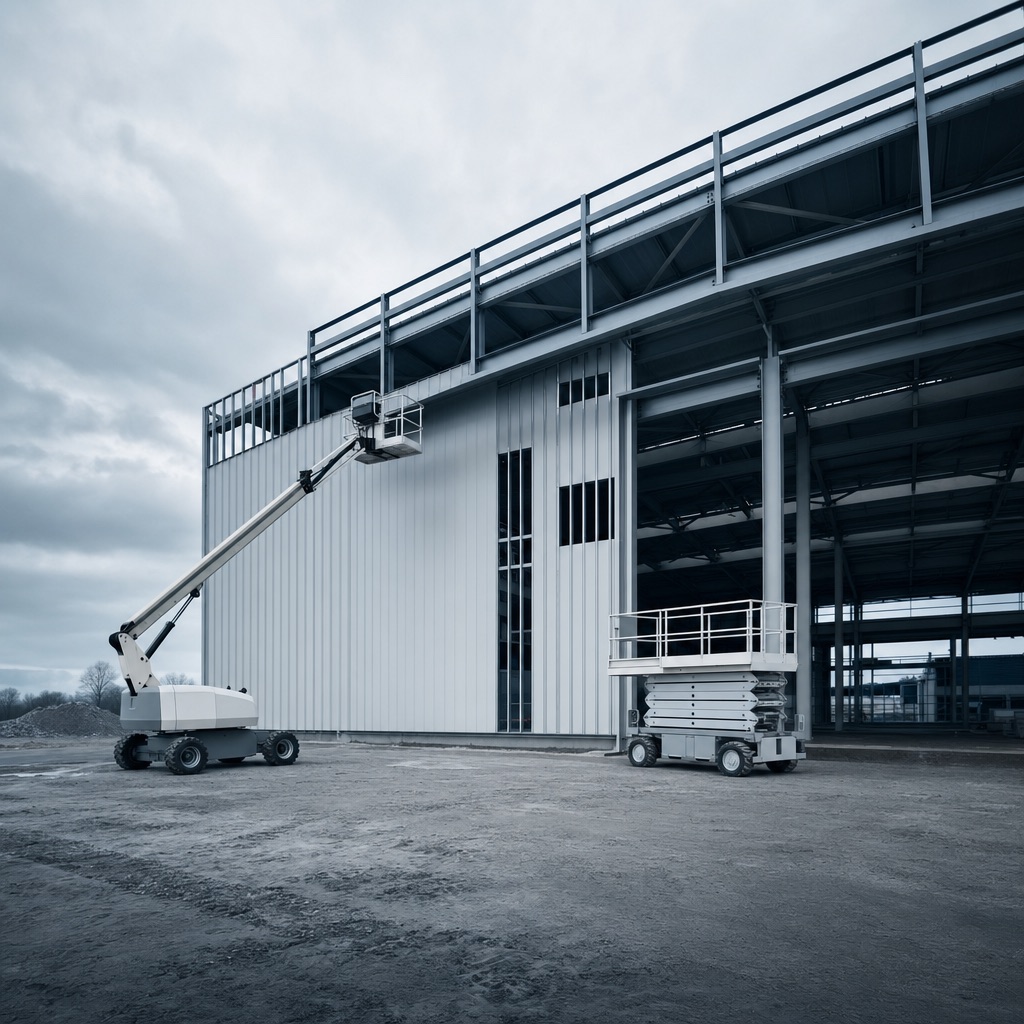
A boom lift and a scissor lift staged on level ground beside a steel-frame building
Often same-day deliverySame day or within 24 hours in many markets, confirmed when you book
7,500+Vetted vendors nationwide
10,000+Projects delivered per year
50States covered
24/7/365Live emergency line
Compare Machine Classes

Compare lift options.

Use these standard class ranges to narrow the options. LDR confirms the specifications for the unit available in your market before delivery.

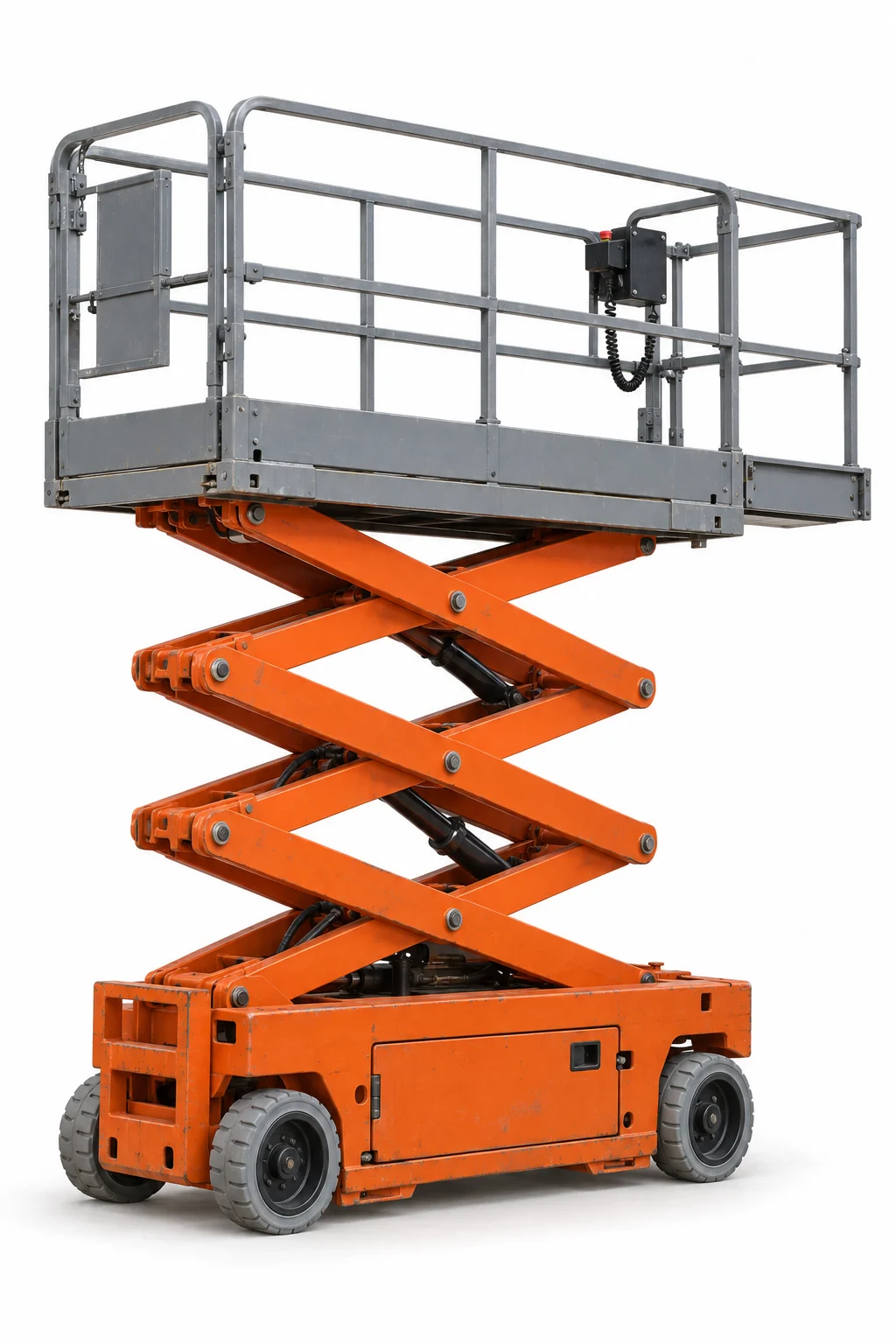
An electric scissor lift
Work directly overhead

Electric and rough-terrain scissor lifts.

Raises a full platform straight up for ceilings, lighting, HVAC, signage, and other work reached from directly below.

Platform height19–40 ft Electric slab units reach 19–32 ft, and rough-terrain units run 26–40 ft. Working height adds 6 ft.
Capacity500–800 lb Electric classes carry a crew of 2 with tools. Rough-terrain units carry more.
Width30–46 in electric, 69–93 in rough terrain A 30–32 in electric unit clears a standard doorway. Rough-terrain units need a gate.
PowerElectric or diesel Electric units with no emissions and non-marking tires for indoor use. Diesel units for use outside.
Key equipment details
  • Guardrailed platform with a slide-out extension deck.
  • Drivable at height with controls on the platform.
  • Non-marking tires on electric units for occupied buildings.
  • Rough-terrain units: four-wheel drive and leveling outriggers.
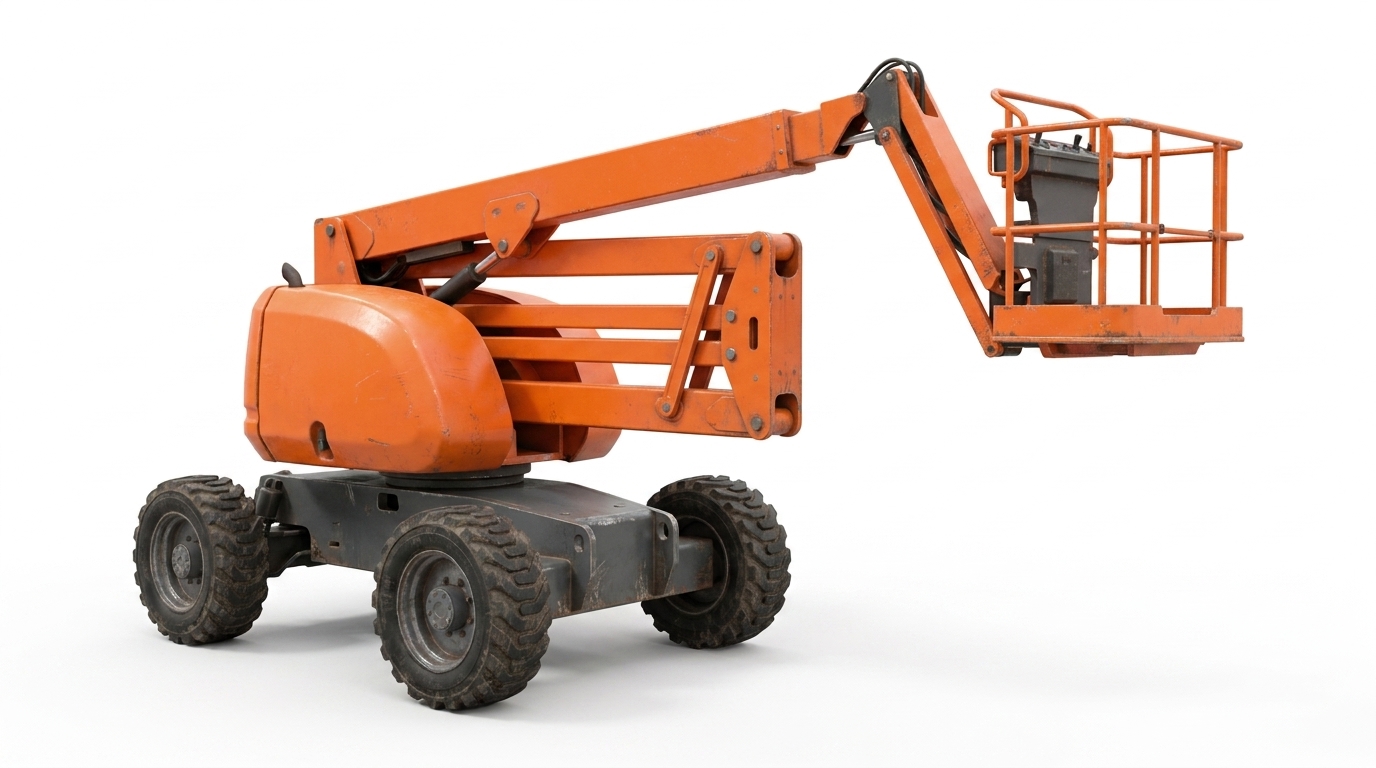
An articulating boom lift
Reach around obstructions

Articulating and telescopic boom lifts.

Carries a bucket to work the machine can't park under. Articulating booms bend up and over obstructions. Telescopic booms extend straight out for maximum reach.

Reach30–135 ft classes Platform heights of 40, 60, and 80 ft, with telescopic classes running past 100 ft.
CapacityAbout 500 lb Carries 1–2 people with tools. The load chart specifies capacity at full reach.
ConfigurationsArticulating or telescopic Bend over the obstruction, or take the straight line.
PowerDiesel, dual-fuel, or electric Options for outdoor and indoor jobs. Electric booms run indoors on finished floors.
Key equipment details
  • Guardrailed bucket with platform controls, drivable at height.
  • 360° turntable, so the reach repositions without moving the base.
  • Articulating units bend over obstructions.
  • Telescopic units carry the longest straight-out reach.
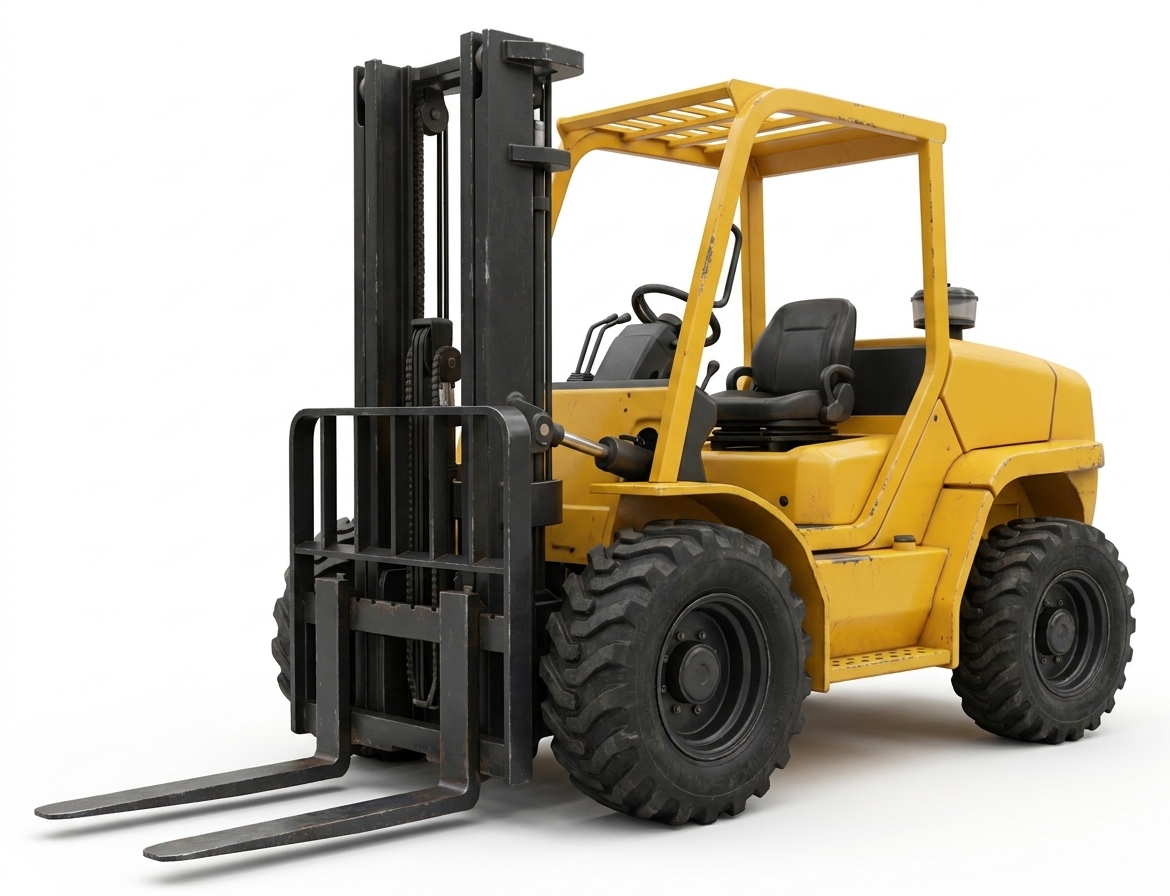
A warehouse forklift
Move material on forks

Warehouse and rough-terrain forklifts.

Raises, carries, and places pallets between trucks, docks, racks, and staging areas. Warehouse units run on flat, hard floors. Rough-terrain units have pneumatic tires for use on gravel and open ground.

Capacity5,000–15,000 lb classes 5,000 lb is the standard workhorse class
Lift height10–20 ft Standard mast range for docks, racking, and staging
TypesWarehouse or rough terrain Cushion tires for use on concrete, and pneumatic tires outside
PowerElectric, LP, or diesel Electric and LP indoors; diesel on the outdoor units
What a forklift does
  • Lifts and moves the load.
  • Standard pallet forks.
  • Rough-terrain units unload trucks where there is no dock.
  • Suitable for the repeat work of receiving, staging, and restocking.
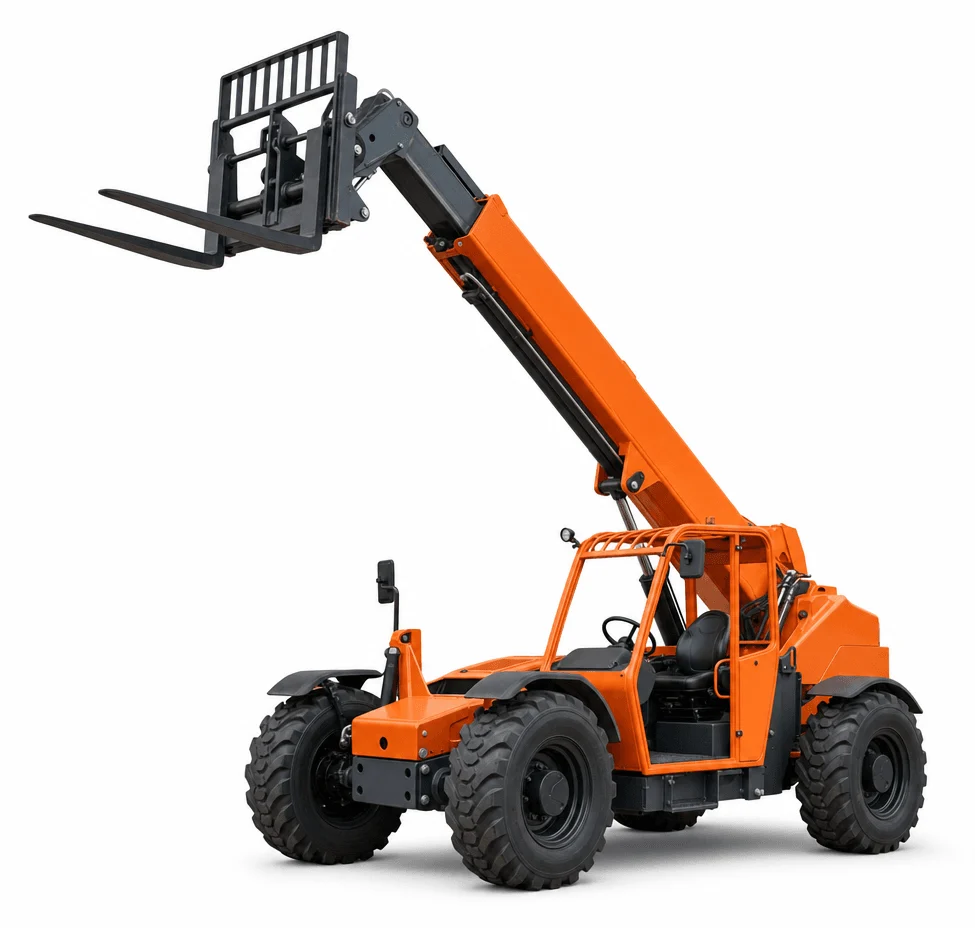
A rough-terrain telehandler with pallet forks
Place loads over rough ground

Telehandlers for heavy material.

Combines forks, a telescoping boom, and rough-terrain tires. It places material forward and upward where a forklift can't go, including roofs, scaffold decks, and upper floors.

Capacity5,500–12,000 lb classes Rated at the base. Capacity drops as the boom extends; the load chart governs
Lift height19–56 ft From the compact 5,500 lb / 19 ft class to full-size 12,000 lb machines
ReachBoom, not mast The load lands forward, past edges and over obstructions a mast can't clear
Terrain4WD rough terrain Built for the ground between the pile and the building
What a telehandler does
  • Places loads at higher positions from ground level.
  • Lifts, travels, and reaches over ground a forklift can't cross.
  • Standard pallet forks on the carriage.
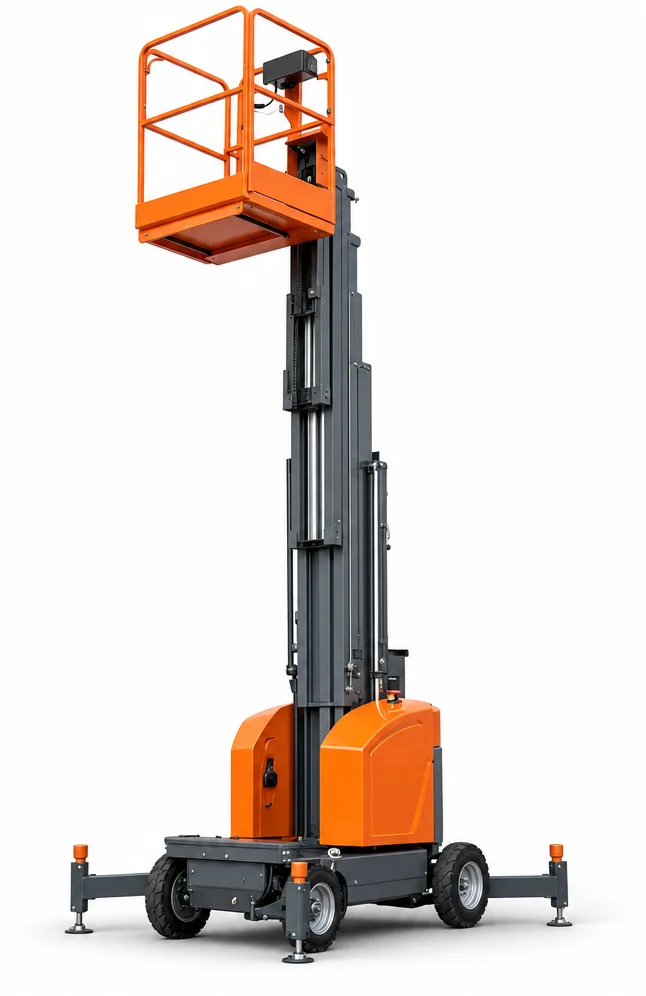
A compact vertical mast lift
Compact indoor access

Vertical mast lifts for tight spaces.

Raises one person in aisles, plant rooms, and finished interiors where even a narrow scissor lift will not fit.

Platform height10–26 ft classes Working height adds about 6 ft above the platform.
Capacity300–500 lb One person and tools.
WidthAbout 30 in Clears a standard doorway and stows at 5–6 ft tall.
DrivePush-around or self-propelled Self-propelled units reposition at height.
What a vertical mast lift does
  • One-person work at height, without scaffold or a ladder.
  • Non-marking tires and no emissions for use in occupied buildings.
  • Fits standard doorways and narrow aisles.
  • Stores inside overnight instead of holding a laydown spot.

Standard sizes shown. Units vary by market and manufacturer, so the ones that arrive on your site may differ. We confirm your units' specifications before delivery, and the rental agreement carries the specifics. All measurements approximate.

Add power, storage, or perimeter control to the order. LDR can coordinate lift equipment with the products needed for night work, laydown, and site access through the same account.
All products
Match The Machine

Key site details determine the right machine.

Send the working height, load, ground conditions, and access path before delivery. Those details determine whether the machine can reach the work, cross the site, and fit through every gate or doorway.

Machine selection checklist
MATCH THE best lift for your project

Provide these 4 details before anything ships.

  • Working height. Measure where the work sits to determine mast, scissor, or boom, and the class within that line. Classes are named by platform height; working height runs about 6 ft above it.
  • Load. Count the people and tools on a platform, or the material to be placed. This separates aerial lifts from forklifts and telehandlers.
  • Ground and slope. Electric equipment for working on a finished indoor slab. Open, soft, or uneven ground requires rough-terrain tires and four-wheel drive.
  • Access. Measure the narrowest gate, doorway, and overhead clearance along the route to the work.
The close calls

Consider the work path.

  • Scissor or boom. Use a scissor when the machine can park directly under the work, and a boom when reaching up and over.
  • Forklift or telehandler. Use a forklift for dock work on flat, hard ground. Use a telehandler to reach over rough ground.
  • Articulating or telescopic. Use an articulating boom to clear an obstruction. Use a telescopic boom for an open, straight reach at a distance.
  • Indoors. Choose an electric unit. Diesel equipment stays outdoors and does not run in enclosed spaces.
The Rental Scope

LDR coordinates the rental from delivery through pickup.

We source the specified class, schedule delivery, respond if the unit fails under normal use, handle extensions with advance notice, and arrange pickup.

As part of the rental agreement, you're required to provide: 

  • Trained, certified operators. Your crew or subcontractor is certified to operate aerial lifts and powered industrial trucks and completes the daily walk-around before work begins.
  • Insurance. Renters carry liability and damage coverage on the unit while it's on your site.
  • Clear access. Confirm the route and set-down area so the specified machine can reach the work.
How LDR manages the orderService scope
01
Sources and schedules deliveryLDR matches the class through 7,500+ vetted vendors. Delivery is often the same day or within 24 hours, depending on the market.
02
Keeps equipment runningA unit that fails under normal use is replaced.
03
Extends the rental when neededGive advance notice so the current unit can remain assigned to your site.
04
Arranges off-hire and pickupCall the same contact when the work ends. LDR coordinates the unit's removal from the site.
When Something Goes Wrong

Call one number when a lift stops working.

A stopped machine stalls the crew assigned to it. LDR's response team answers 24/7/365 and coordinates the next step.

A failed unit is replaced.

When a unit fails under normal use, LDR coordinates a replacement.

Extend the rental.

Extensions are routine on most sites. Give advance notice so the unit stays available and work can continue.

Add or change equipment.

Request a swap, a second unit, or another equipment line without starting over with a new yard in each market.

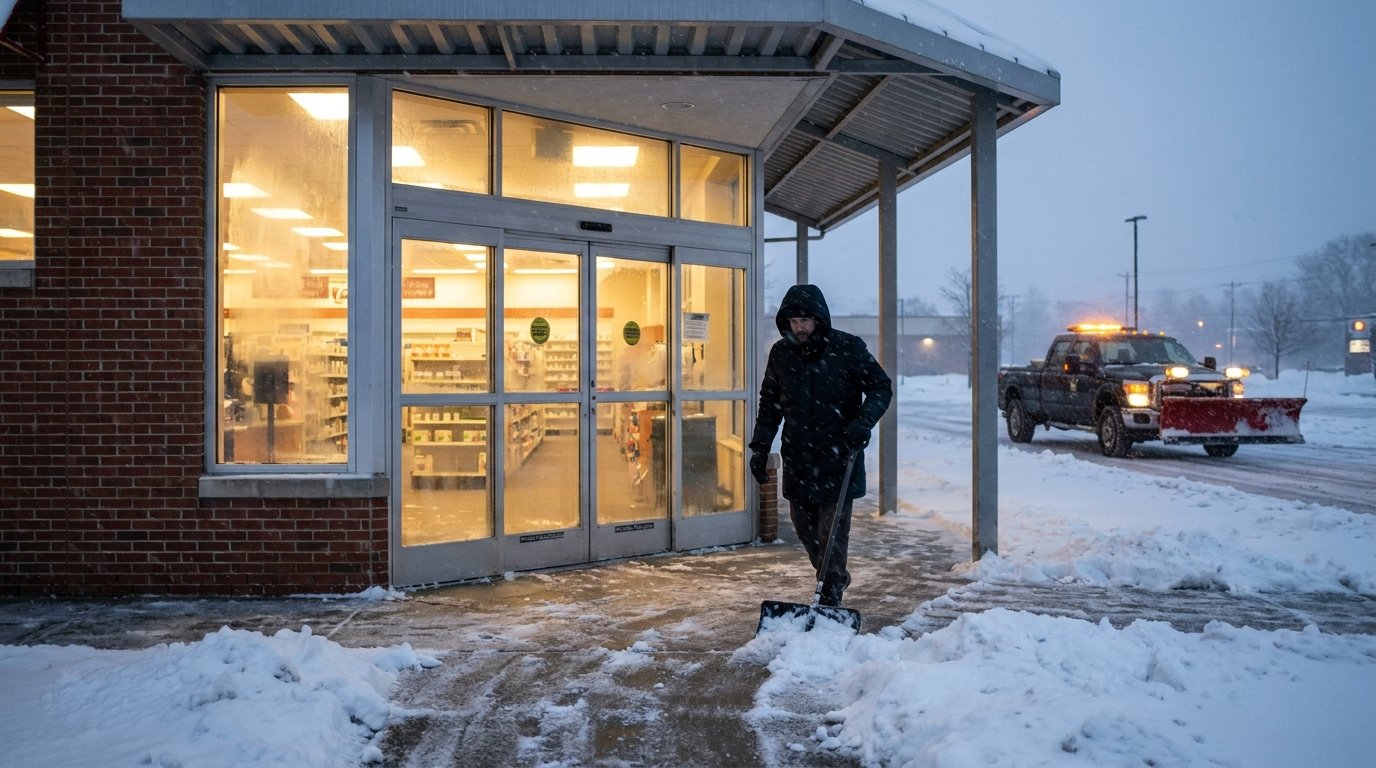
Winter Storm Response A pharmacy entrance with the walkway cleared and salted during a snowstorm.
Stores stayed openPrescriptions uninterrupted

In 2021, a winter storm system burst pipes across a national pharmacy chain. At the peak, LDR fielded as many as 15 frozen-pipe calls a day. Teams coordinated flood cleanup, contamination control, and portable restrooms across the affected stores. Every location stayed open and sanitary, and prescriptions continued without interruption. 

Read the case study
Call 877-605-2211
Call LDR today, our team is ready to take your call.

FAQs.

Do I need insurance to rent lift equipment?
Yes. Insurance is a condition of the rental. The rental agreement carries the coverage specifics for your units.
How much does lift equipment cost to rent?
Pricing depends on the machine line, rental duration, and market. Send the task and site details for a quote. There is no deposit and no obligation to book.
How fast can you deliver?
Delivery is often the same day or within 24 hours, depending on the market and available inventory. Call for your site's delivery window.
Which machines work indoors?
Electric scissor lifts, vertical mast lifts, and electric booms have no emissions and non-marking tires, so they run on finished floors in occupied buildings. Diesel rough-terrain units stay outside; never run one in an enclosed space.
Does my crew need certification to operate a lift?
Yes. Your crew or subcontractor must provide trained, certified operators for aerial lifts and powered industrial trucks. LDR coordinates sourcing, delivery, replacement equipment, and pickup.
What happens if the equipment breaks down during my rental?
A unit that fails under normal use gets replaced with one call to the 24/7/365 line. The rental agreement carries the specific policies.
Can I extend my rental if the project runs long?
Yes. Extensions are routine. Notify us in advance so the unit's availability on your site is protected and you avoid additional fees.
Can you cover more than one site?
Yes. One account gives you one contact, team, and invoice across the markets you operate in, backed by 7,500+ vetted vendors in all 50 states.
Memberships and credentials: ConnexFM memberNational Waste & Recycling Association memberISN member contractor

Plan the right lift equipment for your site.

Send the working height, load, ground conditions, and access constraints. LDR will match the machine class, confirm the available unit, and coordinate delivery through your account.

No obligation. 24/7/365. Nationwide.